Free Consultation
(818) 984-2242
Free Consultation
(818) 984-2242
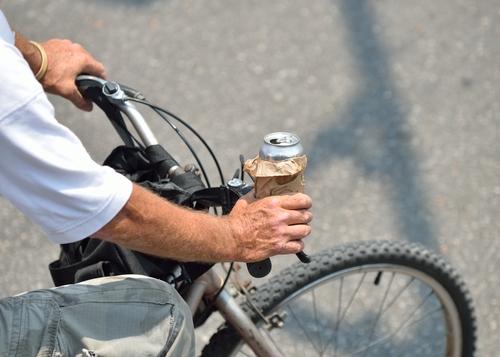
Yes, you can be charged for riding a bicycle under the influence in California, but this isn’t the same charge as a conventional DUI. California has a separate law, Vehicle Code Section 21200.5, that specifically addresses bicycling while intoxicated, and it carries its own set of rules, defenses, and consequences that differ significantly from a typical drunk driving case.
At The DUI Man, we help California riders understand exactly what they’re being charged with and what defenses might apply. If you were cited or arrested for riding a bicycle under the influence, call (818) 984-2242 to talk with our team.
Vehicle Code Section 21200.5 makes it unlawful to ride a bicycle on a highway while under the influence of alcohol or drugs. This is often referred to informally as a bicycle DUI, bicycle under the influence, or cycling under the influence, though the formal charge is distinct from California’s standard DUI statutes that apply to motor vehicles.
No. A conventional California DUI, charged under Vehicle Code Sections 23152 and 23153, applies to driving a motor vehicle and carries penalties that can include license suspension, mandatory DUI school, and significant fines that scale with prior offenses. A bicycle DUI under
Section 21200.5 is a separate, more limited misdemeanor offense, with its own penalty structure that’s generally less severe than a motor vehicle DUI, though it still carries real consequences worth taking seriously.
To establish a violation of Vehicle Code section 21200.5, the prosecution generally must prove beyond a reasonable doubt that:
The statute does not create a separate 0.08% BAC offense for bicycle riders. A prosecutor may instead rely on the totality of the evidence, such as driving behavior, officer observations, statements, and any admissible testing evidence.
A conviction under Vehicle Code section 21200.5 can result in a fine of up to $250. The statute does not impose the same punishment structure associated with a conventional motor-vehicle DUI, such as the potential for jail, DUI school, DUI probation, or an automatic adult driver’s-license suspension.
Even so, a citation should not be ignored. The consequences can depend on the rider’s age, the court disposition, and whether the incident also involves another alleged offense.
If you received a citation for cycling under the influence anywhere in California, call The DUI Man at (818) 984-2242 to discuss the facts and potential defenses in your case.
For riders who were at least 13 but under 21 when the offense occurred, a conviction for a qualifying alcohol- or drug-related offense may result in a one-year suspension of driving privileges or a one-year delay in obtaining a license under Vehicle Code section 13202.5. The specific application of that statute should be evaluated based on the charge, age, and court outcome.
For adults 21 and older, Vehicle Code section 21200.5 does not itself impose an automatic driver’s-license suspension. However, related allegations or separate charges could change the analysis.
Call The DUI Man at (818) 984-2242 for a case-specific review of whether a citation could affect your driving privileges.
The legal analysis can change substantially depending on the device. A qualifying electric bicycle is generally treated as a bicycle, so Section 21200.5 may apply. Motorized scooters and mopeds are governed by different provisions, and impaired operation can lead to different charges and consequences.
Classification may depend on how the device is built, powered, and legally defined, not simply on what it is called in everyday conversation. A careful review of the device and the facts of the stop is important before assuming which statute applies.
Several defenses can potentially apply to a bicycle DUI charge, depending on the facts of your case, including:
Every case turns on its own specific facts, and a careful review of the circumstances surrounding your citation is the best way to identify which of these defenses may apply.
If you’ve been cited or arrested for riding a bicycle under the influence, a few steps can help protect your position:
A bicycle DUI charge might seem minor compared to a conventional DUI, but it still carries real consequences, from a fine on your record to, in some cases, a threat to a young rider’s future driving privileges. The prosecution also has to prove several technical elements, particularly whether you were actually on a highway at the time, which means there’s often more room to fight the charge than people realize.
The DUI Man has spent years digging into exactly these kinds of technical distinctions, evaluating whether the location, the impairment evidence, and the specific facts of a citation actually hold up against what the law requires. If your bicycle DUI case connects to a broader concern about how a conventional DUI might affect you down the road, or you want to understand how California’s DUI laws have shifted heading into 2026, our team can walk you through it.
Contact The DUI Man at (818) 984-2242 today, and let us take a hard look at whether the charge against you actually holds up.
Potentially. Vehicle Code section 21200.5 does not set out a separate 0.08% BAC threshold for riding a bicycle. The issue is whether the person was under the influence while riding, based on the evidence in the individual case.
Section 21200.5 provides for a fine of up to $250. Because the statutory text does not expressly use the terms “misdemeanor” or “infraction,” it is safer to focus on the charge and the penalty authorized by the statute rather than applying a categorical label without further case-specific legal analysis.
A rider who was at least 13 but under 21 when the offense occurred may face a one-year suspension or delay of driving privileges under a separate statute covering qualifying alcohol- and drug-related offenses. Section 21200.5 does not itself impose an automatic license suspension on adults 21 and older.
It may depend on whether the device meets California’s legal definition of an electric bicycle. Other devices, including motorized scooters and mopeds, are subject to different statutes and can carry different consequences.
