Free Consultation
(818) 984-2242
Free Consultation
(818) 984-2242
California law enforcement agencies use DUI checkpoints to screen drivers for signs of impairment. Many law enforcement agencies announce checkpoints in advance, which gives drivers a chance to plan ahead. The most reliable way to stay informed about California DUI checkpoints is to follow official announcements from local police, sheriff’s departments, and the California Highway Patrol, and to treat any checkpoint as a reminder to plan a sober ride before you drink.
The DUI Man focuses on DUI defense throughout California and helps drivers understand their rights and next steps. If a checkpoint stop does lead to an arrest, our team can help you understand what comes next. Contact The DUI Man at (818) 984-2242 for a free consultation.
A DUI checkpoint, sometimes called a sobriety checkpoint, is a planned stop where officers briefly screen drivers for signs of impairment. Unlike a regular traffic stop, which requires an officer to have a reason to pull you over, such as speeding or weaving, a checkpoint stops vehicles based on a neutral pattern, such as every car or every third car.
California courts allow checkpoints when they follow specific guidelines, which our article on whether DUI checkpoints are legal in California explains in more detail.
An officer may ask for your license, registration, and proof of insurance and ask a few simple questions while observing you for signs of impairment, such as the odor of alcohol, slurred speech, or bloodshot eyes. The initial screening should be brief, although wait times and further investigation can make the stop longer.
If the officer notices signs of possible impairment, the stop can turn into a DUI investigation. You may be directed to a secondary area, asked additional questions, asked to perform field sobriety tests, or asked to take a roadside breath test. What began as a brief screening can then lead to an arrest.
The best checkpoint information comes from the agencies that run them.
Many city police departments and county sheriff’s offices announce upcoming checkpoints through press releases, their official websites, or local news outlets. Announcements often list the date and time window and sometimes a general area or the city where the checkpoint will be held rather than an exact intersection.
The California Highway Patrol and many local agencies share checkpoint and enforcement notices on their official social media accounts, especially before holiday weekends. Following the verified accounts for your city police department, county sheriff, and local CHP office is one of the easiest ways to stay informed.
Not every checkpoint post you see online is current or accurate. Before relying on an announcement, check these details:
In the Bay Area, checkpoints may be run by city departments such as the San Francisco, Oakland, and San Jose police departments, as well as county sheriff’s offices and the CHP.
In Orange County, cities such as Anaheim, Santa Ana, Huntington Beach, and Irvine have their own police departments, while the Orange County Sheriff’s Department serves other areas.
In the Sacramento area, the Sacramento Police Department, the Sacramento County Sheriff’s Office, and the CHP all conduct enforcement operations.
In Los Angeles County, checkpoints may be run by the LAPD, the Los Angeles County Sheriff’s Department, the CHP, or one of the many independent city police departments, such as those in Glendale, Burbank, and Long Beach.
Not reliably. Some websites list past checkpoint locations, but historical listings aren’t upcoming schedules. Agencies choose locations based on their own data and planning, and a spot used last year may not be used again. Treating an old list as a forecast can give drivers a false sense of where enforcement will or won’t happen.
This guide doesn’t track or guarantee checkpoint locations, and The DUI Man doesn’t offer a live checkpoint map or alert service.
Have questions about a checkpoint stop or arrest? Call The DUI Man at (818) 984-2242 to discuss what happened and your next steps.
The best way to handle a DUI checkpoint is to never drive impaired in the first place. Plan a sober ride before you drink or use any substance that could affect your driving, whether that means a designated driver, a rideshare, a taxi, or public transportation. Remember that impairment isn’t limited to alcohol, and some prescription medications and cannabis can also affect driving.
If you approach a checkpoint, stay calm and follow the officers’ directions, cones, and signs. Have your license, registration, and proof of insurance easily accessible. Avoid sudden U-turns, illegal turns, or other unsafe maneuvers to get around a checkpoint. Turning away isn’t illegal on its own, but traffic violations committed while avoiding a checkpoint can give officers a separate reason to stop you and can create safety hazards for everyone on the road.
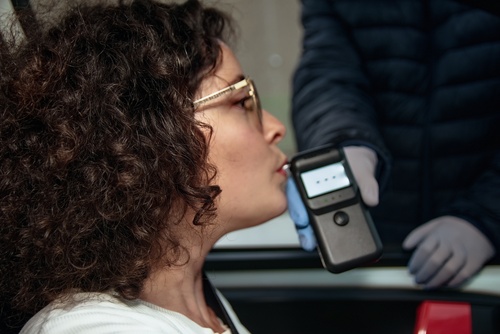
A preliminary alcohol screening (PAS) test is a handheld breath test an officer may request during the investigation, before an arrest. For most drivers who are 21 or older and not on DUI probation, the PAS test is generally optional, and officers are required to advise drivers of that.
Under California’s implied consent law, driving in the state generally carries an obligation to submit to required chemical testing, usually a breath or blood test, after a lawful DUI arrest. Taking a roadside PAS test does not satisfy that separate testing requirement.
Drivers under 21 and people on DUI probation are subject to different testing rules. If an officer lawfully detains one of these drivers and has reasonable cause to believe the driver violated the applicable 0.01% BAC restriction, a PAS or other chemical test may be required.
Refusing or failing to complete a required post-arrest chemical test can result in a DMV license suspension or revocation, separate from the criminal case. The length depends on qualifying prior offenses and administrative actions.
If you’re arrested after a checkpoint stop, take these steps to help protect your license and your defense:
The DUI Man handles California DUI defense and DMV hearing matters with personalized attention and clear communication about fees. After a checkpoint arrest, The DUI Man can review the checkpoint procedures, testing, and evidence to identify potential defense issues.
Contact The DUI Man at (818) 984-2242 for a free consultation. Our team is available 24/7.
