Free Consultation
(818) 984-2242
Free Consultation
(818) 984-2242
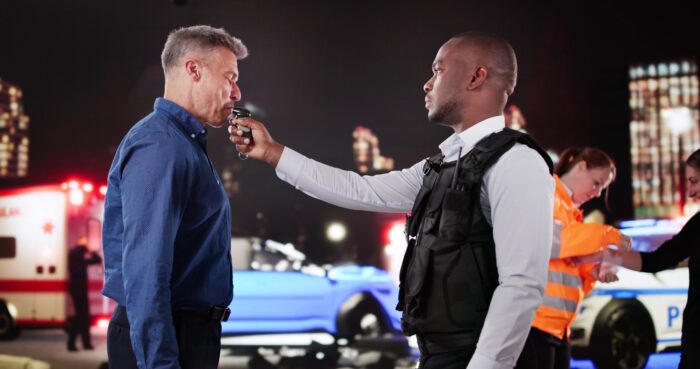
If you were recently arrested for DUI in California, your case likely hinges on one crucial piece of evidence: your breathalyzer test result. Breathalyzers are used across the state by law enforcement to estimate blood alcohol concentration (BAC).
But how accurate are these devices, and can their results be challenged in court?
The DUI Man understands how California regulates breathalyzer testing and what can affect their accuracy. Attorney Michael Bialys has been defending the rights of those charged with a DUI for years.
Breathalyzers are designed to measure the amount of alcohol in a person’s breath, which is then converted into an estimated blood alcohol concentration (BAC). While these devices are widely used, they are not always accurate. Even when operated correctly, a breathalyzer does not directly measure the amount of alcohol in your blood, only the alcohol in your breath.
If this is your first DUI, it’s important to know what can cause an inaccurate breathalyzer test. Common variables that can cause breathalyzer readings to differ from actual BAC levels:
A skilled DUI attorney can review your test results and identify whether any of these factors might have affected your result.
California has specific regulations that govern how breathalyzer devices are maintained, tested, and used. These laws ensure that only approved devices and trained operators are used in DUI enforcement.
Under California Code of Regulations, Title 17, breathalyzer devices must be calibrated and maintained regularly. Law enforcement agencies must test these devices for accuracy at least every 10 days or after 150 uses, whichever comes first. Failure to follow these rules can make test results inadmissible in court.
For a breath test result to be admissible in a DUI case, the prosecution must prove that:
If any of these conditions are not met, a defense attorney can challenge the validity of the results.
The California Department of Public Health (CDPH) oversees the approval of breathalyzer models used by police departments. The agency also sets the scientific standards that determine how BAC should be measured and verified. Only CDPH-approved devices are legally permitted for use in California DUI arrests.
Even when properly maintained, several external or biological factors can lead to inaccurate breathalyzer results. Common factors include:
If your test was administered under questionable circumstances, your attorney can request calibration logs, maintenance records, and officer training documentation to challenge the results. Inform your attorney immediately if you have any condition or there were other variables that might affect a breathalyser at the time of arrest.
Breathalyzer results often serve as primary evidence in DUI prosecutions. However, because these tests can be influenced by human error, device malfunction, or biological factors, their accuracy is frequently contested in court.
If your BAC was close to the legal limit of 0.08 percent, even a small margin of error could mean the difference between a conviction and a dismissal. Challenging the reliability of breathalyzer evidence can be a powerful defense strategy.
An experienced DUI attorney will examine every detail of your test, including whether the officer complied with Title 17, whether the device was properly certified, and whether your constitutional rights were respected during the stop and testing process.
When facing a DUI charge in California, knowing what to do immediately after a breathalyzer test can protect your rights and strengthen your defense.
If you suspect your breathalyzer was inaccurate, it is best to document this as soon as possible by gathering every record you can. Here’s a few things you can do:
Your attorney will be able to assist in acquiring these records but their retrieval should begin as soon as possible after you have been charged.
Under California’s implied consent law, drivers agree to submit to chemical testing when lawfully arrested for DUI. Refusing a breathalyzer or blood test can lead to automatic driver’s license suspension and other penalties. However, if the officer failed to follow proper procedures or lacked probable cause, the refusal may not be legally enforceable.
An attorney can help determine whether a refusal was lawful and challenge administrative penalties before the Department of Motor Vehicles (DMV).
If you were arrested for DUI and believe your breathalyzer test was inaccurate, you need a defense attorney who understands California’s complex DUI laws and the science behind breath testing.
The DUI Man has extensive experience defending clients across California against DUI charges, including cases involving questionable breathalyzer evidence. Our team knows how to identify procedural errors, challenge faulty test results, and protect your rights in court.
To discuss your case, contact us today at (818) 984-2242 for a free, confidential consultation.